Español
 Français
 中文简体
中文简体

Product Consultation
Your email address will not be published. Required fields are marked *
Content
Soft dry wipes are pre-cut, unfragranced, and unmoistened sheets of absorbent nonwoven or tissue material designed for gentle cleaning, wiping, dabbing, and drying across a wide range of personal care and hygiene applications. Unlike wet wipes, which come pre-saturated with water, preservatives, fragrances, and other chemical additives, dry wipes contain no added substances beyond the fabric itself. This makes them a significantly simpler and purer product — one that is less likely to cause skin irritation, allergic reactions, or chemical sensitivity, particularly in the most delicate populations such as newborns, elderly individuals, and people with compromised or sensitive skin conditions.
The distinction matters more than it might initially appear. Wet wipes, despite their convenience, introduce a range of potential irritants including preservatives such as methylisothiazolinone, fragrances, propylene glycol, and other formulation ingredients that have been associated with contact dermatitis and skin sensitization in clinical literature. Dry wipes eliminate this risk entirely. They can be used dry for gentle cleaning, or dampened with water, saline, or a parent's or clinician's preferred solution to create a customized wet wipe that matches the specific needs of the user — with full control over what comes into contact with the skin.
Soft dry wipes serve a broad spectrum of applications across domestic, clinical, and personal care environments. Their versatility stems from the combination of softness, absorbency, and the absence of added chemical content, which makes them adaptable to many different tasks and user requirements.
Newborn skin is significantly thinner, more permeable, and more susceptible to irritation than the skin of older infants and adults. Leading dermatological and midwifery guidelines in several countries have moved toward recommending plain water and soft dry wipes for neonatal skincare during the first weeks of life, in preference to conventional wet wipes that may contain preservatives or fragrances. Soft dry wipes dampened with warm water provide effective and gentle cleansing during nappy changes, face washing, and general skin care without introducing unnecessary chemical exposure during the critical period when the skin barrier is still developing. Many neonatal intensive care units (NICUs) use dry wipes as standard for this reason.
For elderly individuals or adults managing incontinence, skin integrity in the perineal region is a significant clinical concern. Prolonged exposure to moisture, friction, and chemical irritants from conventional wet wipes can contribute to incontinence-associated dermatitis (IAD) — a painful and potentially serious skin condition that affects a large proportion of those requiring continence care. Soft dry wipes used with warm water or an appropriate skin-cleansing lotion applied separately allow carers to clean effectively while minimizing the chemical load delivered to already-vulnerable skin. Their high absorbency also makes them effective for drying the skin thoroughly after cleansing, which is an important step in IAD prevention that pre-moistened wipes cannot accomplish.
Hospitals, clinics, and care homes use soft dry wipes extensively for patient hygiene, wound area preparation, and general clinical cleaning tasks. Their lint-free or low-lint construction makes them suitable for use around wounds and surgical sites where fiber shedding could introduce contamination. When used with sterile saline or wound irrigation solution, dry wipes provide a clean, controlled method for gentle wound cleansing that is widely accepted in modern wound care protocols. They are also used for eye care, oral care, and personal hygiene washes for patients who are immobile or bed-bound.
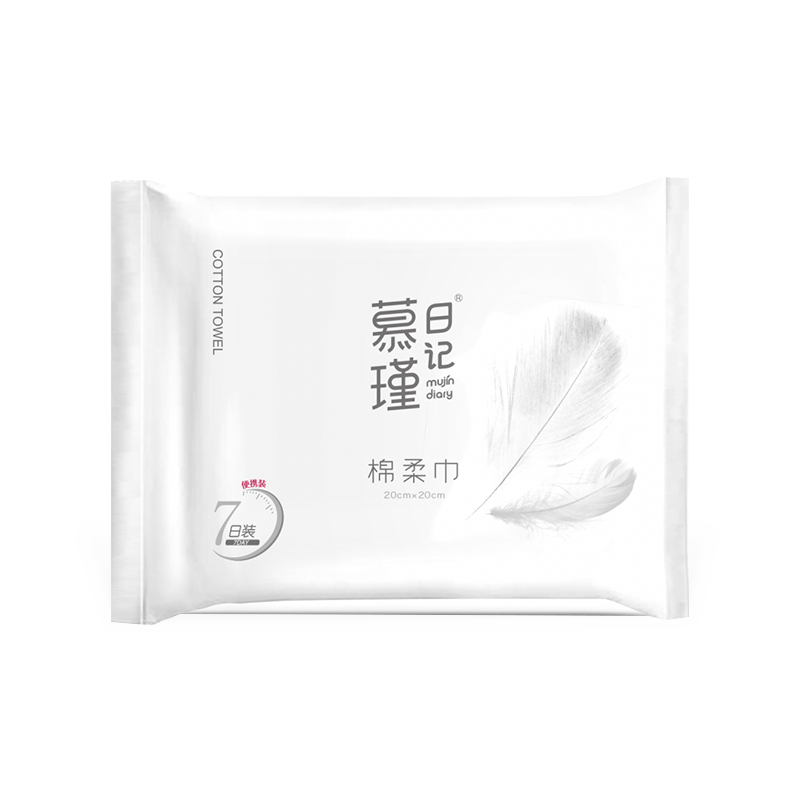
Individuals with eczema, psoriasis, rosacea, or other chronic skin conditions often find that conventional wet wipes trigger flares due to the preservatives and fragrances they contain. Soft dry wipes provide a fragrance-free, preservative-free alternative that can be used safely even on acutely inflamed or broken skin. Dermatologists frequently recommend dry wipes for patients with known contact allergies to common wet wipe ingredients, and they are routinely included in eczema management advice for both children and adults.
The material composition of a soft dry wipe determines its softness, absorbency, strength when wet, linting behavior, and environmental impact. Understanding the differences between available materials allows buyers to select the most appropriate product for their specific application.
| Material | Key Properties | Best Suited For |
| Spunlace Nonwoven (100% Viscose) | Very soft, highly absorbent, biodegradable, low lint | Newborn care, sensitive skin, clinical use |
| Spunlace Nonwoven (Viscose/Polyester Blend) | Soft, strong when wet, moderate absorbency, durable | Baby care, incontinence care, general hygiene |
| Cotton Nonwoven | Extremely soft, natural fiber, hypoallergenic, good absorbency | Neonatal NICU use, eczema-prone skin, facial care |
| Airlaid Tissue | Highly absorbent, thick, cloth-like feel, strong when wet | Incontinence care, heavy-duty cleaning tasks |
| Embossed Tissue / Dry Tissue Wipes | Lightweight, cost-effective, soft surface texture | Light-duty baby care, face wiping, general use |
For the most sensitive applications — particularly neonatal care or clinical wound management — 100% viscose or 100% cotton nonwoven materials are generally preferred due to their natural fiber content, high absorbency, and minimal fiber shedding. Blended viscose-polyester nonwovens offer improved strength and durability at a lower cost, making them a practical choice for higher-volume applications such as adult incontinence care where large quantities are consumed daily.
One of the most practical advantages of soft dry wipes over pre-moistened alternatives is the flexibility they offer in terms of how they are used. Depending on the task and the preference of the user or carer, dry wipes can be deployed in several different ways to optimize cleaning effectiveness while maintaining gentleness on the skin.
The environmental performance of soft dry wipes has become an increasingly important consideration for consumers and procurement managers in both domestic and institutional settings. The global market for disposable wipes has attracted significant scrutiny due to the widespread use of plastic-containing nonwoven materials that do not biodegrade and have contributed to the well-documented problem of wipes blocking sewage systems when incorrectly flushed.
Soft dry wipes made from 100% viscose or 100% cotton nonwoven materials offer a meaningfully better environmental profile than many wet wipes, which frequently contain polyester fibers that prevent biodegradation. Viscose is a cellulose-based fiber derived from wood pulp that is biodegradable under composting and industrial degradation conditions. Products certified to the EDANA Fine to Flush standard or carrying independent biodegradability certifications provide users with verified evidence of environmental performance — an important distinction in a market where greenwashing claims are common.
Packaging is also a relevant factor. Dry wipes packaged in recyclable cardboard boxes or paper-based wrapping generate less plastic waste than wet wipes sold in plastic tubs or foil-sealed pouches. Some brands now offer dry wipes in compostable packaging to further reduce the environmental footprint of the product across its full lifecycle.
With a wide range of soft dry wipe products available across different material types, sizes, thicknesses, and price points, selecting the most appropriate option requires matching product specifications to the specific demands of the intended use. The following criteria provide a practical framework for evaluation.
Soft dry wipes are considerably simpler to store than pre-moistened alternatives because they do not contain moisture that could support microbial growth during storage. However, a few practical guidelines help maintain product quality and hygiene from purchase through to use.
Your email address will not be published. Required fields are marked *
You can contact to me using this form.


Copyright © 2023 Shanghai Taicikang Industrial Co., Ltd. All Rights Reserved.
 OEM/ODM Wet Wipes Manufacturers
BACK TOP
OEM/ODM Wet Wipes Manufacturers
BACK TOP