Español
 Français
 中文简体
中文简体

Product Consultation
Your email address will not be published. Required fields are marked *
Content
The short answer is: it depends entirely on the type of wet wipe. Regular wet wipes — baby wipes, facial wipes, antibacterial hand wipes, or household cleaning wipes — should not be used as a toilet paper substitute for daily hygiene. They are not formulated for perianal skin, they are not safe to flush, and repeated use can disrupt the delicate skin barrier in that area. Moist toilet tissue, however, is a purpose-engineered product specifically designed to replace or complement dry toilet paper — formulated for sensitive skin, pH-balanced, and in certified cases, genuinely flushable.
The confusion between these two product categories is widespread and has real consequences — for personal health, household plumbing, and municipal wastewater infrastructure. The global moist toilet tissue market was valued at over USD 2.1 billion in 2023 and continues to grow as consumers seek cleaner, gentler alternatives to dry paper. Understanding what separates a purpose-made moist toilet tissue from a generic wet wipe is the foundation for making the right choice.
Moist toilet tissue and standard wet wipes are both pre-moistened nonwoven fabric products — but they are engineered for fundamentally different purposes, and the formulation differences are significant.
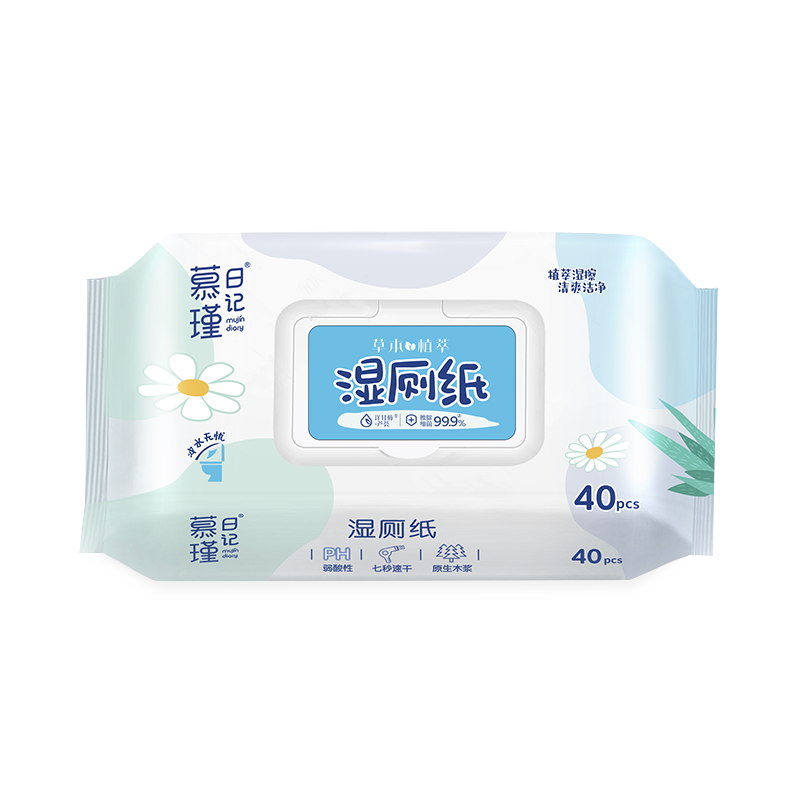
The perianal skin is among the most sensitive on the human body. Its normal pH sits between 5.5 and 7.0 — slightly acidic to neutral — and it is subject to friction, occlusion, and repeated moisture exposure. Moist toilet tissue formulations are pH-balanced to match this range, using gentle, dermatologically tested lotion systems that cleanse without stripping the skin's natural protective barrier. Many contain skin-conditioning actives such as aloe vera, chamomile extract, or glycerin to actively support skin health with repeated use.
Standard baby wipes and facial wipes — even those marketed as "gentle" — are formulated for different skin regions with different pH targets and different active ingredient profiles. Antibacterial wipes contain preservatives and biocides (such as benzalkonium chloride) that are appropriate for hand hygiene but can cause contact dermatitis and irritation with repeated use on perianal skin. Household cleaning wipes contain surfactants and disinfectants entirely inappropriate for any skin contact.
Moist toilet tissue substrates are designed to be soft, strong when wet, and gentle on sensitive skin. They typically use spunlace nonwoven fabrics made from viscose (rayon), lyocell, or blends — materials chosen for their skin-softness, absorbency, and in flushable versions, their ability to disperse in water. The fabric weight (gsm) and fiber orientation are optimized for the specific wiping action needed in toilet hygiene.
Baby wipes use heavier, more durable substrates engineered for repeated folding and robust cleaning of larger skin areas. Household wipes use even coarser, stronger fabrics with scrubbing surfaces entirely inappropriate for personal hygiene. The physical substrate difference alone — before considering formulation — makes most wet wipe categories unsuitable for toilet hygiene use.
All pre-moistened wipe products require a preservative system to prevent microbial growth in the wet lotion during shelf life. The preservatives acceptable for moist toilet tissue are a narrower, more conservative set than those used in general wet wipes — prioritizing low sensitization potential for repeated intimate skin contact. Common systems in quality moist toilet tissue include phenoxyethanol, sodium benzoate, or potassium sorbate at concentrations validated for skin safety. Many premium products are now formulated preservative-free using sealed packaging technology (nitrogen-flush sealing) that prevents microbial contamination without chemical preservatives.
The single most consequential difference between moist toilet tissue and regular wet wipes — from an infrastructure and environmental perspective — is flushability. And this is an area where the distinction between product types is absolute.
A genuinely flushable product must pass a series of rigorous dispersion tests that verify it breaks apart rapidly in water under toilet and sewer system conditions. The international standard is the INDA/EDANA Flushability Assessment Guidelines (GD4/GD5), which tests products for toilet bowl clearance, drain-line clearance, and slurry disintegration. Products certified under these guidelines disintegrate within minutes of flushing — behaving functionally like toilet paper in the wastewater system.
Standard wet wipes — including virtually all baby wipes regardless of labeling — do not pass these tests. Their durable nonwoven substrates remain intact for months or years in wastewater systems. Wipes are now the leading cause of sewer blockages ("fatbergs") in municipal wastewater infrastructure worldwide. A 2019 survey by UK water companies found that wipes made up 93% of the material causing sewer blockages — costing the UK alone over £100 million annually in clearance and infrastructure repair.
For moist toilet tissue products claiming flushability, look for the following:
Even certified flushable products should be flushed one at a time — not in multiples — and are not suitable for properties with older plumbing, low-flow toilets, or septic tank systems where the retention time and water volume differ from municipal sewer assumptions.
The hygiene case for moist toilet tissue over dry paper is supported by clinical evidence, particularly for individuals with specific perianal health conditions. This is an area where product design makes a measurable difference to skin health outcomes.
Multiple studies comparing dry toilet paper to wet cleansing methods have found that dry paper leaves significantly more fecal residue on perianal skin than wet cleansing. A 2018 study published in the Journal of Wound, Ostomy and Continence Nursing found that moist cleansing reduced residual fecal contamination by over 30% compared to dry wiping alone. For patients with hemorrhoids, anal fissures, post-surgical wounds, or inflammatory bowel disease, this cleansing advantage has direct clinical significance.
Dry toilet paper — even premium quilted varieties — exerts mechanical friction on perianal skin with every wipe. For individuals who wipe multiple times, use rough paper, or have pre-existing skin sensitivity, this cumulative friction contributes to microabrasion, skin barrier disruption, and the development or worsening of pruritus ani (chronic perianal itching). Moist toilet tissue's lubricated surface reduces friction coefficient substantially, making it the recommended choice by dermatologists and proctologists for patients with perianal skin disorders.
Certain groups benefit particularly from moist toilet tissue over standard dry paper:
| Factor | Regular Wet Wipes | Moist Toilet Tissue | Dry Toilet Paper |
|---|---|---|---|
| Formulated for perianal skin | No | Yes | Yes (basic) |
| pH balanced for intimate use | Rarely | Yes | N/A (dry) |
| Safe to flush | No | Certified versions: Yes | Yes |
| Cleansing efficacy | High (wrong use) | High | Moderate |
| Skin friction / irritation risk | High (wrong ingredients) | Low | Moderate–High |
| Environmental impact | High (plastic fibers) | Low–Moderate (cellulosic) | Low–Moderate (paper) |
| Cost per use | Low–Mid | Mid–High | Low |
With the moist toilet tissue market now crowded with products ranging from genuine clinical-grade formulations to relabeled baby wipes, knowing what to look for on the packaging is essential.
If flushability is important, look specifically for the Fine to Flush (FTF) certification mark (UK/Europe) or verified compliance with INDA GD4/GD5 (North America). The word "flushable" on packaging without third-party certification has no standardized meaning and should not be trusted. Many products labeled "flushable" have failed independent dispersion testing.
Moist toilet tissue is available in several packaging formats, each with practical implications:
The most effective perianal hygiene routine — endorsed by dermatologists and colorectal surgeons — combines dry toilet paper and moist toilet tissue rather than relying exclusively on either. The recommended sequence is straightforward:
This combination approach achieves superior cleansing outcomes to dry paper alone, uses fewer moist wipes per visit than full moist-only routines, and reduces the environmental and cost footprint of moist tissue use. For individuals with perianal health conditions, the combination approach is the clinical standard recommended across major gastroenterology and dermatology guidelines.
The bottom line: regular wet wipes are not a suitable toilet paper substitute — their formulation, substrate, and flushability profile all make them wrong for the job. Moist toilet tissue, purpose-engineered for this specific use, delivers genuinely superior hygiene outcomes when used correctly, and represents a meaningful upgrade to the standard bathroom routine for most people.
Your email address will not be published. Required fields are marked *
You can contact to me using this form.


Copyright © 2023 Shanghai Taicikang Industrial Co., Ltd. All Rights Reserved.
 OEM/ODM Wet Wipes Manufacturers
BACK TOP
OEM/ODM Wet Wipes Manufacturers
BACK TOP